Imagine Yourself
Meta AI's tuning-free personalized image generation, see yourself in any scene from a single reference photo, no per-person fine-tuning required. I built the prototypes we used to test the models in research sessions, and the promo that introduced it.
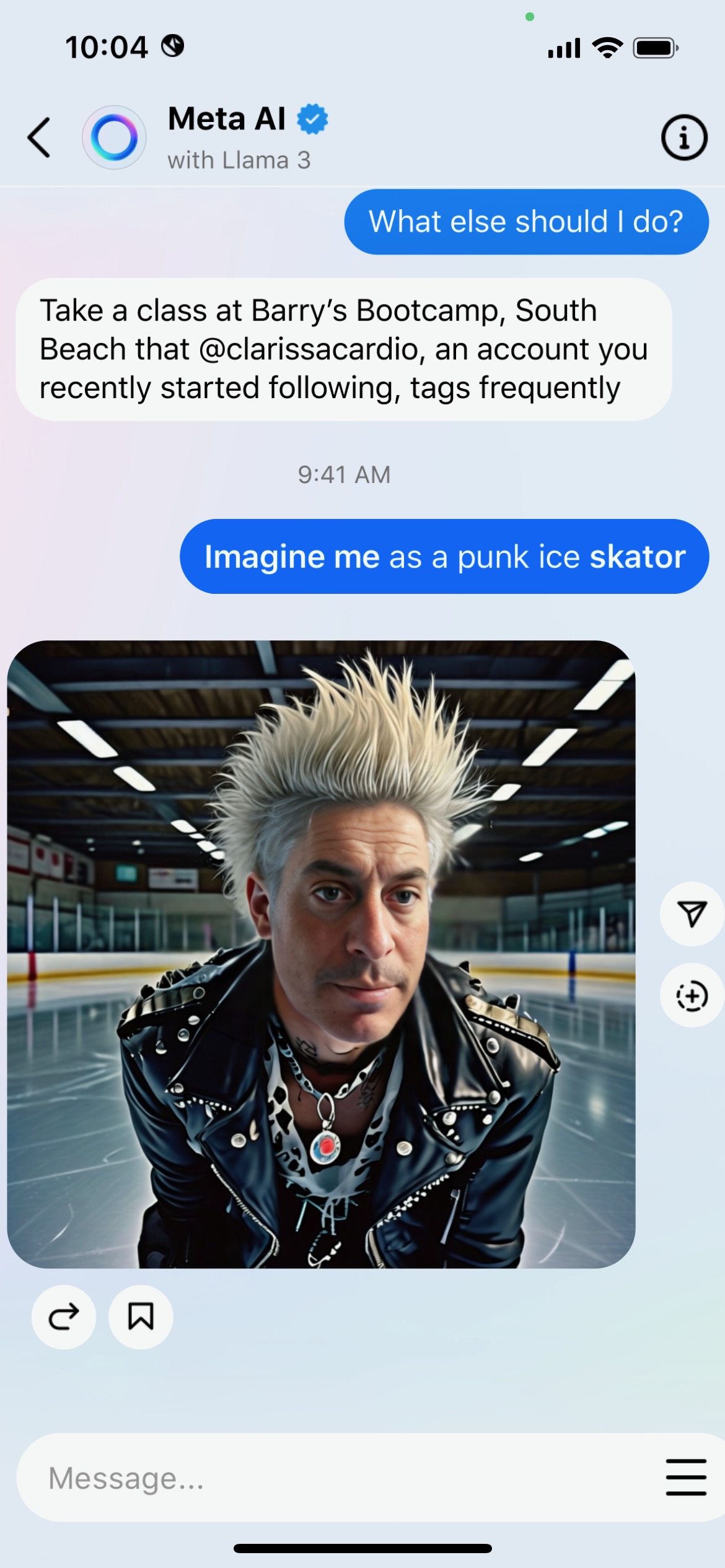

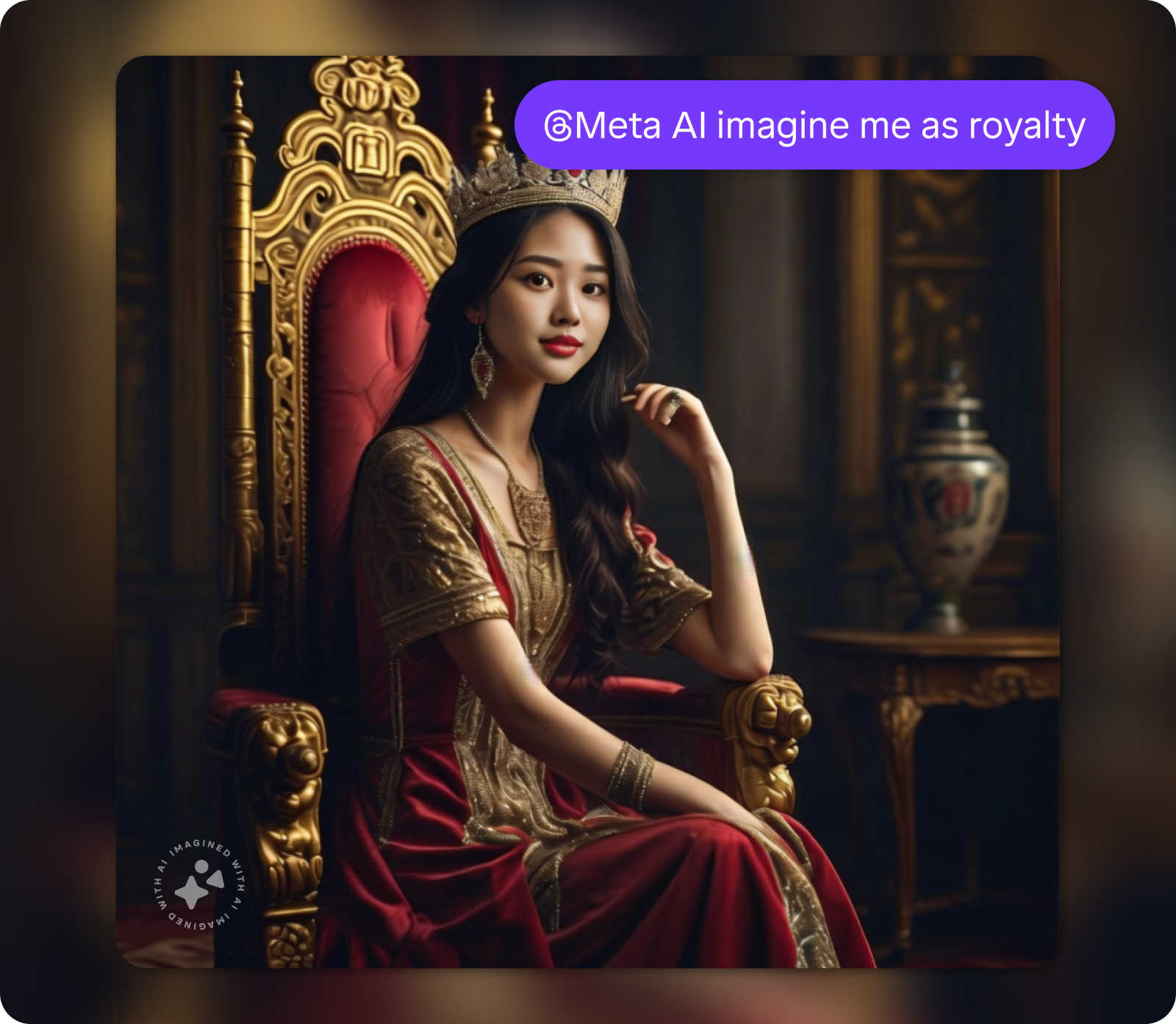


Generated results with prompts, via Meta Newsroom.
Overview
Imagine Yourself lets people put themselves into AI-generated images, reimagined as an astronaut, in a painting, anywhere a prompt can describe, from just a single photo. Unlike earlier approaches, it's tuning-free: there's no lengthy per-person training step, so the experience can feel immediate.
I built the interactive prototypes the team used to test the underlying models with real people in research sessions, and the Origami-built promo that introduced the feature. The prototypes turned a research capability into something you could actually hold, prompt and react to.
Expand your world
The feature promo introducing Imagine Yourself, and Mark Zuckerberg sharing it.
Shared by Mark
Mark Zuckerberg sharing Imagine Yourself on Threads.
Via @zuck on Threads.
What the prototype had to prove
A single reference image is enough, no fine-tuning, no waiting to train a model on you.
Describe a scene and see yourself in it, testing how identity, likeness and prompt intent hold together.
Pacing, loading and reveal designed so a heavy generative process feels responsive and alive.
Wired to real outputs, so what participants reacted to in research was the actual model behaviour.
Prototyping to test a model, not just a UI
When the thing you're evaluating is a generative model, the prototype has to be real enough that people react to the model, not to a mockup around it. I built the experience so research participants could prompt it, wait through the generation, and respond to genuine results, so the team could learn how the model felt in someone's hands.
Those sessions fed directly back into how the feature was shaped before it reached Meta AI.
Enter the access code to continue.